Traditional Wrist tattoo ideas
Traditional — bold outlines, limited palette, readable at a distance — on the wrist. What it costs you in pain and touch-ups, how big it should really be, and three starting points you can turn into concept directions before you talk to an artist.
- Realistic size window: 6–8 cm on the longest side. Below 6 cm traditional detail closes up; measure the range against your own wrist before the consult, not on a phone screen.
- The wrist is a high-wear area, but traditional is the kind of bold, saturated work that survives it best. Expect some softening at the edges and possibly one touch-up, not a redesign.
- Traditional at wrist size means one bold subject — a small swallow, a heart, a dagger — around 5–7 cm. Anything busier loses the outline weight that makes the style age well.
Three starting points
Each opens the generator with the idea, style and placement prefilled. You get 3 deliberately different concept directions with composition notes and risk flags — consultation material, not final tattoo art.
Anchored Emblem
a swallow carrying a banner, traditional, wrist
Generate 3 directions from this →
Organic Flow
a dagger through a rose, traditional, wrist
Generate 3 directions from this →
Minimal Structure
a ship in a storm with a rope border, traditional, wrist
Generate 3 directions from this →
Or start from your own idea
The style
Traditional tattoos
American traditional (old school) is built on bold black outlines, a limited palette — red, yellow, green, black — and simple, readable shapes. It has the best long-term track record of any style: heavy outlines and solid fills hold together as skin ages, which is why decades-old sailor tattoos are still legible. Artists warn against shrinking a traditional design below the size where its outlines can stay bold, and against asking for 'traditional but with thin lines', which ages like neither style.
Suits: roses and daggers · swallows and eagles · panthers and snakes · ships and anchors · banners with short lettering
The placement
Tattoos on the wrist
The wrist is small, highly visible and busy: tendons, bone and constant movement mean higher pain (about 5–7 out of 10, worst on the inner wrist and the bony outer side) and slower healing where watch straps and cuffs rub. Realistic size is 3–8 cm, and a band or wrap-around must account for the wrist being thinner on one side. Artists warn that the inner wrist gets sun and friction all day, that fine detail there fades faster than almost anywhere else on the arm, and that most designs need to leave room around the wrist crease.
Works well here: small symbols and dates · thin bands and bracelets · single small botanicals · short script · small moons and stars
What the generator actually gives you
Not one image to reroll — three planned composition strategies (an anchored emblem, an organic flow, a minimal structure) with rationale and honest risk notes, then a preview on your own body photo, then a hand-off to your artist. Below: real, unedited pipeline output.
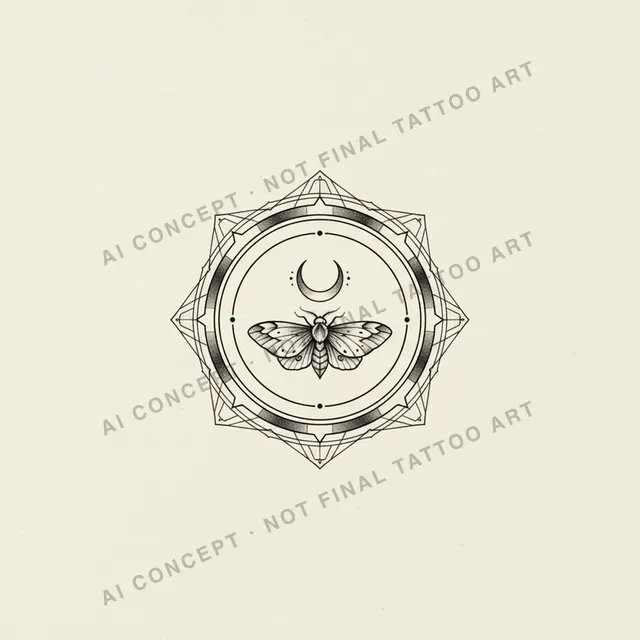
Anchored Emblem
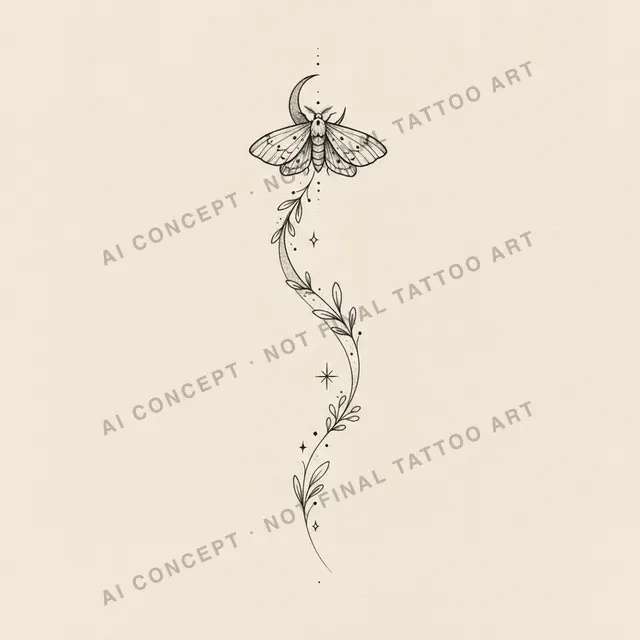
Organic Flow
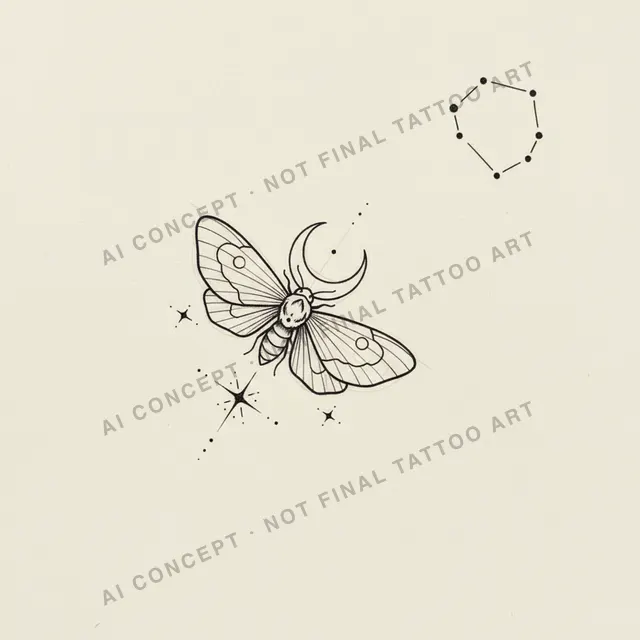
Minimal Structure
Related ideas
Traditional elsewhere
Other styles on the wrist
All traditional placements · All styles on the wrist · How to write a tattoo design brief · Preview it on your own photo
Questions, answered honestly
How much does a traditional wrist tattoo hurt?+
The wrist is one of the more painful placements: most people rate it 5–7 out of 10, fairly consistently across the area. Traditional is comparatively quick to execute, so sessions for a piece in the 6–8 cm range are usually short.
How big should a traditional wrist tattoo be?+
A realistic range is 6–8 cm on the longest side. Traditional needs at least 6 cm before healed detail stays legible, and the wrist comfortably takes 3–8 cm. Measure with a ruler on your own skin — sizes agreed on a phone screen are almost always smaller than the client imagined.
How will traditional age on the wrist?+
Traditional is among the most durable styles: bold shapes and saturated ink hold together for decades. The wrist has high sun and friction exposure, which speeds that up — expect a touch-up.
Turn a traditional wrist idea into a plan
Brief, 3 directions, placement preview, artist review. Free for you — artists pay for the workflow, not you for images.
For tattoo artists
Your clients arrive prepared. You stay in control.
Structured briefs, region comments, approvals, and quote-to-deposit flow — without giving up a single stroke of your final design. AI never trains on your work.