Traditional Upper Arm tattoo ideas
Traditional — bold outlines, limited palette, readable at a distance — on the upper arm. What it costs you in pain and touch-ups, how big it should really be, and three starting points you can turn into concept directions before you talk to an artist.
- Realistic size window: 10–25 cm on the longest side. Below 6 cm traditional detail closes up; measure the range against your own upper arm before the consult, not on a phone screen.
- Ageing outlook is good: traditional holds up very well, and upper arm skin has low sun and friction exposure.
- Let the design follow the curve of the upper arm rather than fighting it — compositions with an S-curve or radial spine sit better than rigid rectangles.
Three starting points
Each opens the generator with the idea, style and placement prefilled. You get 3 deliberately different concept directions with composition notes and risk flags — consultation material, not final tattoo art.
Anchored Emblem
a swallow carrying a banner, traditional, upper arm
Generate 3 directions from this →
Organic Flow
a dagger through a rose, traditional, upper arm
Generate 3 directions from this →
Minimal Structure
a ship in a storm with a rope border, traditional, upper arm
Generate 3 directions from this →
Or start from your own idea
The style
Traditional tattoos
American traditional (old school) is built on bold black outlines, a limited palette — red, yellow, green, black — and simple, readable shapes. It has the best long-term track record of any style: heavy outlines and solid fills hold together as skin ages, which is why decades-old sailor tattoos are still legible. Artists warn against shrinking a traditional design below the size where its outlines can stay bold, and against asking for 'traditional but with thin lines', which ages like neither style.
Suits: roses and daggers · swallows and eagles · panthers and snakes · ships and anchors · banners with short lettering
The placement
Tattoos on the upper arm
The outer upper arm — bicep and tricep — is muscular, padded and among the least painful places to be tattooed (around 3 out of 10), with wrap-around space for pieces 10–25 cm and a natural path to a half sleeve later. Skin here is thick, ages slowly and is usually covered by a T-shirt sleeve, which makes it a practical choice when workplace visibility matters. The inner bicep is a different story: thin, sensitive skin, higher pain and more swelling — artists warn that designs crossing from outer to inner arm will distort as the bicep flexes.
Works well here: animal portraits · roses and florals · ships, lanterns, keys · half-sleeve panels · radial emblems
What the generator actually gives you
Not one image to reroll — three planned composition strategies (an anchored emblem, an organic flow, a minimal structure) with rationale and honest risk notes, then a preview on your own body photo, then a hand-off to your artist. Below: real, unedited pipeline output.
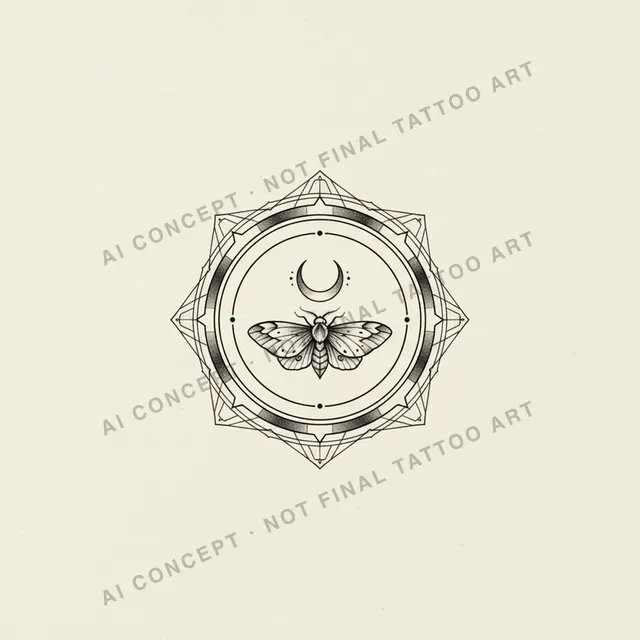
Anchored Emblem
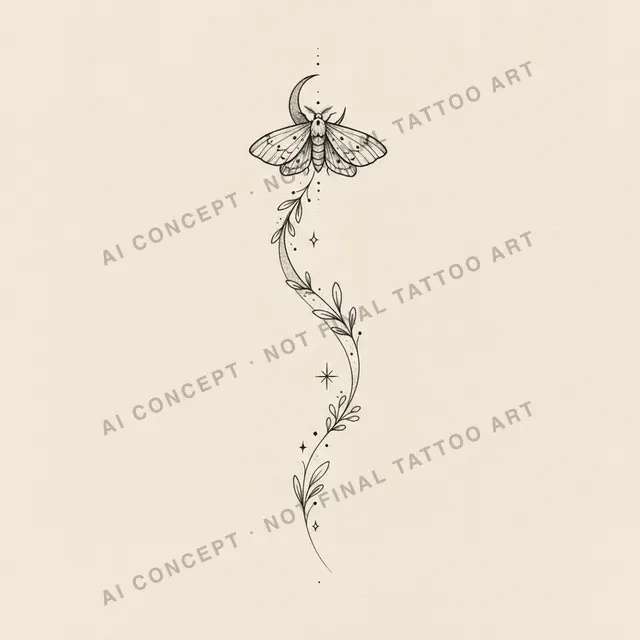
Organic Flow
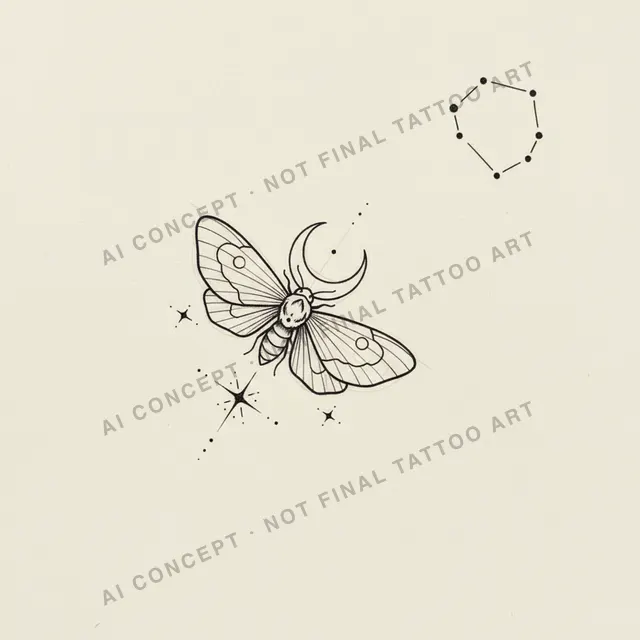
Minimal Structure
Related ideas
Traditional elsewhere
Other styles on the upper arm
All traditional placements · All styles on the upper arm · How to write a tattoo design brief · Preview it on your own photo
Questions, answered honestly
How much does a traditional upper arm tattoo hurt?+
The upper arm is one of the more comfortable placements: most people rate it 2–4 out of 10, fairly consistently across the area. Traditional is comparatively quick to execute, so sessions for a piece in the 10–25 cm range are usually short.
How big should a traditional upper arm tattoo be?+
A realistic range is 10–25 cm on the longest side. Traditional needs at least 6 cm before healed detail stays legible, and the upper arm comfortably takes 10–25 cm. Measure with a ruler on your own skin — sizes agreed on a phone screen are almost always smaller than the client imagined.
How will traditional age on the upper arm?+
Traditional is among the most durable styles: bold shapes and saturated ink hold together for decades. The upper arm is well protected from sun and friction, which is the best-case scenario for longevity.
Turn a traditional upper arm idea into a plan
Brief, 3 directions, placement preview, artist review. Free for you — artists pay for the workflow, not you for images.
For tattoo artists
Your clients arrive prepared. You stay in control.
Structured briefs, region comments, approvals, and quote-to-deposit flow — without giving up a single stroke of your final design. AI never trains on your work.