Blackwork Back tattoo ideas
Blackwork — solid black fills and bold silhouettes — on the back. What it costs you in pain and touch-ups, how big it should really be, and three starting points you can turn into concept directions before you talk to an artist.
- Realistic size window: 6–45 cm on the longest side. Below 4 cm blackwork detail closes up; measure the range against your own back before the consult, not on a phone screen.
- Ageing outlook is good: blackwork holds up very well, and back skin has low sun and friction exposure.
- Large solid fills on the back are physically demanding sessions and heal slowly where you sleep on them. Break the piece into sessions by area rather than by outline-then-fill.
- Expect a demanding session: blackwork is slow work per square centimetre and parts of the back rate 4–7 out of 10 for pain. Ask up front whether the piece will be split across sittings.
Three starting points
Each opens the generator with the idea, style and placement prefilled. You get 3 deliberately different concept directions with composition notes and risk flags — consultation material, not final tattoo art.
Anchored Emblem
a solid black crow silhouette with negative-space feathers, blackwork, back
Generate 3 directions from this →
Organic Flow
an ornamental blackwork band with woven knots, blackwork, back
Generate 3 directions from this →
Minimal Structure
a black sun with negative-space rays, blackwork, back
Generate 3 directions from this →
Or start from your own idea
The style
Blackwork tattoos
Blackwork means solid black fills, bold silhouettes and high contrast, from ornamental bands to large negative-space pieces. Solid black is the most stable ink on skin — it holds its shape for decades and can be reworked or expanded later — but large fills mean long sessions, more pain per hour and heavier scabbing if the skin is overworked. Artists warn that solid areas over 8–10 cm across usually need more than one session, and that a big black fill is close to impossible to lighten later.
Suits: silhouettes with negative-space detail · ornamental bands and patterns · botanical blackwork · cover-ups and rework · bold lettering
The placement
Tattoos on the back
The back is the largest, flattest canvas on the body: the shoulder blades and upper back are moderate pain (4–5 out of 10), the spine and lower back higher (6–7). It takes anything from a 6 cm piece between the shoulder blades to a full back piece over 40 cm, and it almost never sees sun, so pigment holds for decades. Healing is the practical problem — you cannot see it, sleeping is uncomfortable and it takes discipline to keep it moisturised; artists warn that the shoulder blades move independently, so a single design across both will shift when you reach forward.
Works well here: spine-aligned vertical pieces · large symmetrical compositions · shoulder-blade pairs · landscape and scene pieces · full back panels
What the generator actually gives you
Not one image to reroll — three planned composition strategies (an anchored emblem, an organic flow, a minimal structure) with rationale and honest risk notes, then a preview on your own body photo, then a hand-off to your artist. Below: real, unedited pipeline output.
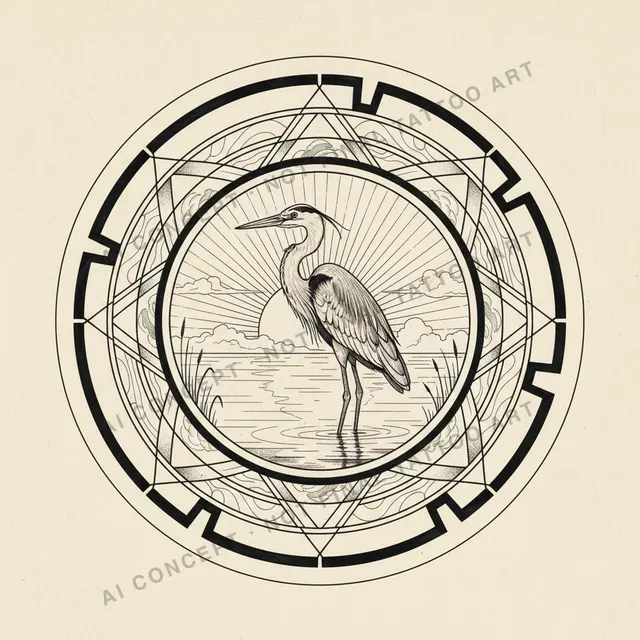
Anchored Emblem
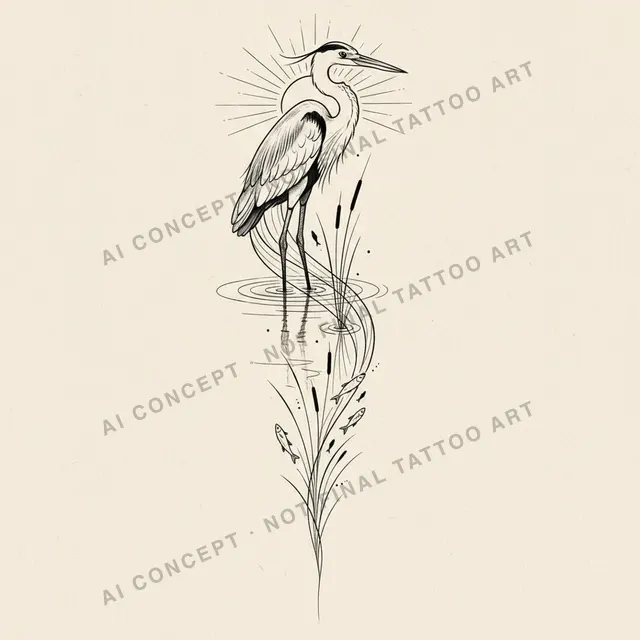
Organic Flow
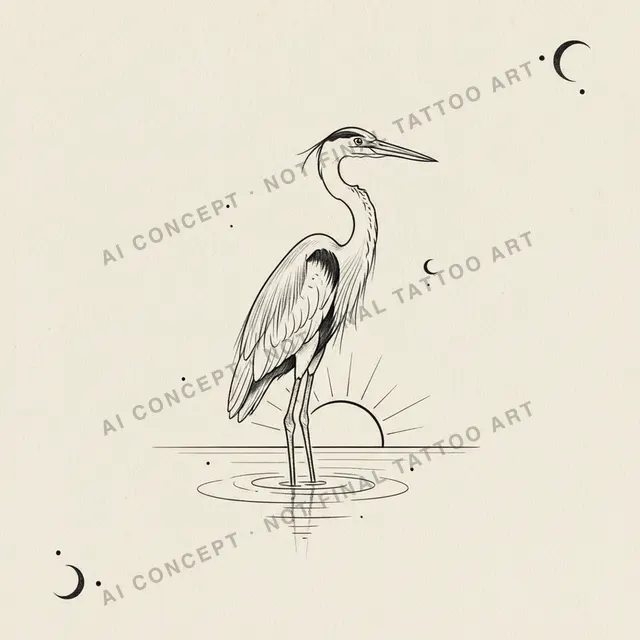
Minimal Structure
Related ideas
Blackwork elsewhere
Other styles on the back
All blackwork placements · All styles on the back · How to write a tattoo design brief · Preview it on your own photo
Questions, answered honestly
How much does a blackwork back tattoo hurt?+
The back is one of the more painful placements: most people rate it 4–7 out of 10, with a big difference between the padded and the bony or thin-skinned parts. Blackwork adds time under the needle because it is slow work per square centimetre, so a piece at the upper end of the size range is usually split into sessions.
How big should a blackwork back tattoo be?+
A realistic range is 6–45 cm on the longest side. Blackwork needs at least 4 cm before healed detail stays legible, and the back comfortably takes 6–45 cm. Measure with a ruler on your own skin — sizes agreed on a phone screen are almost always smaller than the client imagined.
How will blackwork age on the back?+
Blackwork is among the most durable styles: bold shapes and saturated ink hold together for decades. The back is well protected from sun and friction, which is the best-case scenario for longevity.
Turn a blackwork back idea into a plan
Brief, 3 directions, placement preview, artist review. Free for you — artists pay for the workflow, not you for images.
For tattoo artists
Your clients arrive prepared. You stay in control.
Structured briefs, region comments, approvals, and quote-to-deposit flow — without giving up a single stroke of your final design. AI never trains on your work.